
Ultimately, stronger water stewardship helps build resilience not only within individual organisations, but across the wider sector.
- Adeline Oliva, Corporate Sustainability Office, Water & Biodiversity Senior Manager, STMicroelectronics
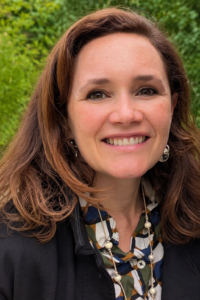
From computers and machinery to smartphones and even toothbrushes, the technology in today’s world relies on microchips. For our second Member Spotlight, we are pleased to feature STMicroelectronics, one of the largest semiconductor companies in Europe with over 200,000 customers globally. Its manufacturing site in Crolles, France was the first in the world to achieve certification against the AWS Standard Version 3.0. In the following Q&A, Adeline Oliva, the Corporate Sustainability Office, Water & Biodiversity Senior Manager at STMicrolectronics, shares her insights into their company’s water stewardship journey, certification and resilience in the broader technology sector.
Can you share a bit about how STMicroelectronics (ST) became interested in water stewardship and explain why it is important for your business?
Our sustainability journey started more than 30 years ago, and water has been an important focus from the beginning. As a semiconductor company, water is essential to our operations, but we also understand that it is a shared resource. Recognising that balance has reinforced the importance of managing water responsibly and taking a long-term view of how we use it.
While water-related challenges are global, we have learned that understanding the local context is essential. Over time, our approach has evolved from focusing primarily on water management within our own operations to a broader water stewardship perspective, which includes understanding the wider catchment and working collaboratively with stakeholders.
How does water stewardship tie into your wider sustainability strategy?
Sustainability is embedded across ST’s activities. That’s reflected in the way we set our priorities. Our approach is guided by a double materiality assessment, which helps us identify and focus on the topics that matter most to both our business and our stakeholders.
The insights gained through this process help shape our sustainability strategy, policies, programs and targets. Water is one of the topics identified through this process. Our actions are guided by our Environmental Policy, Global Water Policy and Water Stewardship Program.
Water stewardship is also reflected in our company-wide sustainability targets, which include increasing our water recycling rate to at least 60% by 2035, achieving annual water savings of 6 million cubic meters compared with 2024, and obtaining AWS certification at our manufacturing sites by 2035.
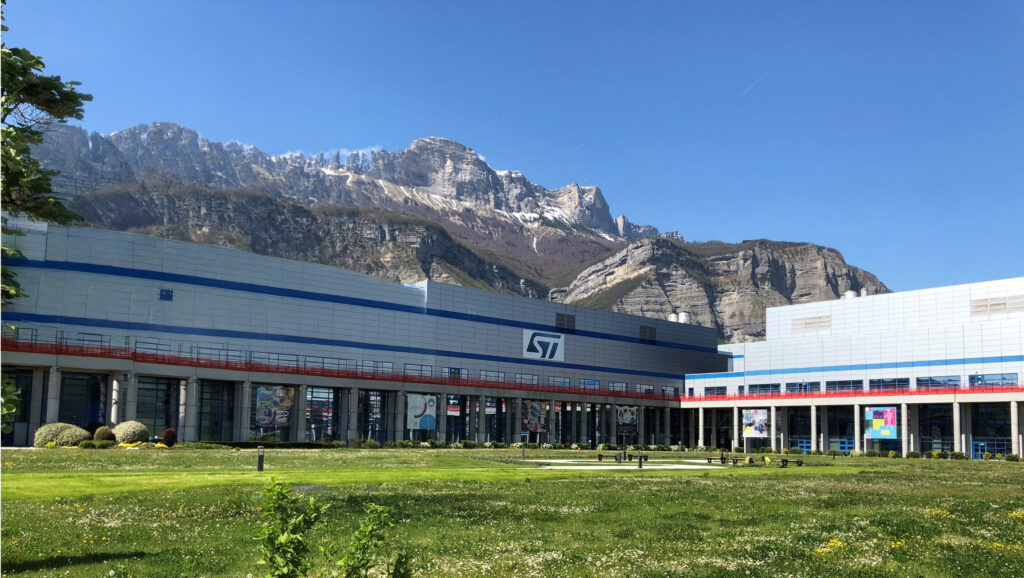
Your site in Crolles, France, was the first globally to achieve certification against the AWS Standard V3.0. Congratulations on this exciting achievement. What does this milestone mean for STMicroelectronics?
Thanks, we’re delighted with this achievement! For me, it reflects the openness of our teams to adopt new approaches, learn from the process and continuously improve our sustainability performance. It is an important recognition of the work carried out over many years to strengthen water stewardship practices. It reflects a structured, site-based approach to understanding local water challenges, engaging stakeholders and improving practices in a measurable way.
Crolles is our first front-end manufacturing site to achieve certification and the experience gained will be shared across ST as other sites progress towards certification. We have a strong culture of collaboration across our manufacturing network and I’m confident that the lessons learned and best practices developed in Crolles will help support future AWS certifications.
It is also an important step towards our target of certifying all of our manufacturing sites to the AWS Standard by 2035.
What aspects of the AWS Standard V3.0 certification process were most valuable for strengthening your site’s water stewardship practices?
What I particularly value is that AWS goes beyond compliance. It encourages organisations to ask broader questions, consider the local context and continually challenge themselves to improve.
The process also provided a structured framework for us to understand the wider catchment as well as assess risks, opportunities and priorities in a consistent way. It helped us bring together expertise from different functions across the site and strengthen the way we manage water-related topics.
Another valuable aspect of Version 3.0 is its broader consideration of topics such as climate resilience, freshwater ecosystems and biodiversity. It encourages organisations to look at water stewardship in a more holistic way and better understand how these issues are interconnected.
That made the certification process both a valuable learning experience and a validation of many of the practices already in place.
How has certification helped create value for the community around the site in Crolles?
One of the biggest benefits has been the opportunity to connect with a diverse range of stakeholders who share our interest in the long-term health and resilience of the watershed. The certification process has helped us strengthen dialogue with local authorities, water experts, businesses and environmental organisations.
These discussions helped create a stronger understanding of the watershed and the different perspectives within it. They also provided a foundation for ongoing dialogue and collaboration, which we see as essential because water stewardship is not a one-time exercise. It evolves over time as conditions, priorities and challenges change.
As a semiconductor manufacturer, how do you think your water stewardship efforts at your sites contributes to the greater resilience of the tech sector?
As the technology sector continues to grow, I think there is increasing recognition that water challenges cannot be addressed by individual companies working in isolation. While every site and watershed is different, many of the challenges we face are similar.
There is a real opportunity to strengthen water stewardship across the broader ecosystem by engaging customers, suppliers, industry peers and other stakeholders. Sharing experiences, lessons learned and good practices can help build resilience throughout the value chain and accelerate progress across the sector.
Ultimately, stronger water stewardship helps build resilience not only within individual organisations, but across the wider sector.
What important lessons did you learn along your journey to certification?
A key lesson was that water stewardship is most effective when it is local, collaborative and data-driven. We also learned that success depends on bringing together different areas of expertise across the site. Early engagement and strong cross-functional collaboration were both essential to the certification process.
We also learned the value of sustained stakeholder dialogue over a one-off consultation. Building relationships with local stakeholders took time, but their input meaningfully shaped our understanding of shared water challenges.
Finally, certification is not an endpoint. It has helped us establish a strong foundation, but water stewardship is an ongoing process that will continue to evolve as conditions, priorities and stakeholder expectations change.
What advice would you give to other sites or companies preparing for certification against AWS Standard V3.0?
Our main advice is not to reshape how your site operates around certification. Start with how you already work and find the most natural way to fit the standard’s requirements into your existing processes, governance and reporting. In our experience, this is more efficient than building parallel structures to satisfy an audit.
Water stewardship works best when it is integrated into existing activities, whether that is, quality management, EHS, environmental monitoring or stakeholder engagement. When approached this way, certification becomes a reflection of how a site operates rather than an exercise designed for a single audit cycle.
It’s also important to start with a deep understanding of your local catchment and your stakeholders. Make water stewardship a shared responsibility across functions, not just an EHS topic. Be prepared to invest time in data quality, engagement and internal alignment. And approach certification as an opportunity to strengthen your practices, not just as a box-ticking exercise.
This AWS Member Spotlight is part of a series celebrating the organisations driving meaningful water stewardship around the world.