
Search

Resource and document centre

Tag: Agriculture

International Women’s Day: Celine and Aude’s story

"Globally, water is becoming a high-interest topic everywhere, not just in water-scarce areas. I believe companies need to approach water at the same level as climate change mitigation."

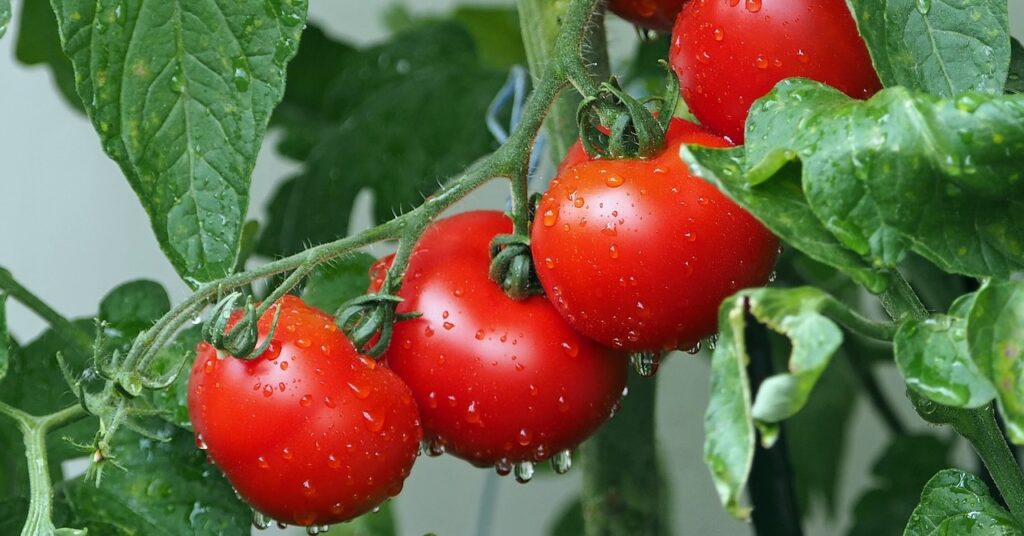
Azura Group is a leading agricultural producer growing tomatoes, fresh herbs, edible flowers and clams for major European retailers and chefs. Azura aims to: ‘grow what is good for the planet, our customers, our teams and communities’.

The company joined AWS as a Funding Member in 2021. Here, Azura’s Celine Montauriol and Aude Ruiz Pradelles share their journeys in water stewardship and what inspiring inclusion means to them.

How would you describe your work to someone who may be unfamiliar with your area of work?

Celine: As Chief Sustainability & Innovation Officer, my job consists of instilling a culture of sustainability and innovation at all levels at Azura – from the CEO to farm workers.

Aude: As Quality System Director, my role is to lead the certifications programmes, including food safety, agricultural best practices and environmental certifications. I also lead a team responsible for food safety monitoring. Every day is different!

What drew you to working in water in particular?

Celine: Azura grows tomatoes in Morocco where water scarcity is increasing due to climate change. Water is an essential need that must be shared between all users – populations, industry, agriculture… We have a responsibility to develop water stewardship plans for our operations.

Aude: My role at Azura has always focused on the environment. As part of our agricultural system and commitment to sustainability, we started looking for a specific methodology dedicated to water. It has been a long journey, but it has led us to AWS.

What does water stewardship mean to you?

Aude: Water stewardship for me is the best way to be more impactful, resilient and efficient. It means looking beyond our farms to lead collective action and share experiences. It means not being afraid to face difficulties and challenge ourselves. It means gathering efforts with stakeholders and learning from the examples of others.

Celine: Developing a good water stewardship approach is essential to preserving water resources for all life locally. It is a good way to share our vision for sustainability with all stakeholders (authorities, communities, suppliers, clients,..) and explore the potential to develop common projects. This is therefore a subject that all water-conscious companies must prioritise.

How have you found working with the Alliance for Water Stewardship (AWS) and/or the AWS Standard?

Celine: We compared different standards in the agricultural sector and we chose the most powerful standard for integrating water action plans and engaging local stakeholders. The AWS Standard is the one we chose!

Aude: The AWS Standard is the most relevant standard for us, even though it is not specific to agricultural activities. I have also gained access to a new network of inspiring people and high-level experts across various sectors. This is also an important aspect of AWS besides the Standard, the AWS community!

What stage would you say you are at in your water stewardship journey?

Aude: We started implementing the AWS Standard in 2019. The internal diagnosis was the first step. Due to our scope (multiple sites, integrated production plus packing operation) and dimensions (47 farms and one packhouse under a unique central management system), it was a real challenge.

We could have selected only a few farms to implement the Standard, but it would have made it more difficult to scale up the process afterward. Water stewardship is now part of our day-to-day work and we have just had our first AWS audit. I think we are at an intermediary stage. We still need to learn and share!

What achievement are you most proud of when it comes to water?

Celine: Globally, water is becoming a high-interest topic everywhere, not just in water-scarce areas. I believe companies need to approach water at the same level as climate change mitigation, and I am proud to play a part in raising that awareness.

Aude: I’m proud of the dedicated team engaged in water stewardship at Azura. Our governance includes operators, managers and division heads who unite complementary skills to set up a common commitment with multiple approaches and viewpoints. We’ve just begun a long journey and it will be a daily challenge, but the team is focused on collective action, innovation and sharing. I’m proud to be part of that.

What does International Women’s Day mean to you?

Celine: It is an important day to remind us of the extent to which women still suffer from unequal treatment around the world, but also to highlight the women fighting against this inequality. We must stay vigilant – nothing can ever be taken for granted!

Aude: It means a lot. Celebrating women’s achievements, honouring trailblazing women who worked and still work for equity worldwide, inspiring future generations. IWD reminds us that we must promote women in all spaces, whatever their ambition and encourage them to reach their full potential.

At Azura, we continually work in networks, workshops and project management meetings. When there is a problem to solve or a project to set up, women from my organisation are mostly at the forefront, in a safe space to speak up. Diversity and the value of inclusion are key to any successful project.

Find out more about Azura Group by reading their latest sustainability report.

Q&A with 2023 Water Stewardship Prize Winner: Manuel Yzaga

“This awesome AWS Water Stewardship Prize means everything to me. It means that all our team’s efforts at Vanguard Peru are moving us in the right direction.”

The AWS Water Stewardship Prize is awarded to an individual who has shown commitment and innovation to the AWS Mission.

Winners of the prize are leaders that promote the responsible use of freshwater that is socially and economically beneficial and environmentally sustainable. At this year’s AWS Forum, we were pleased to announce Manuel Yzaga, CEO of Vanguard Peru, as the winner.

As CEO, Manuel sees taking care of people and water as an important part of his role at Vanguard Peru. In his fight for sustainable management of the Ica Valley, he has championed water stewardship. His work with others in the region has helped to tie water to the things that matter most to the community, such as helping to raise people out of poverty and soccer (as soccer fields require water for grass). In addition, as the president of PROVID (a union for table grape producers in Peru), his local-level leadership on water has not only influenced other companies in the region but has extended into the country’s wider agricultural export industry.

We caught up with Manuel after the Forum to hear a little bit more about the importance of water and get his insights on the value of water stewardship.

How important is water for the agricultural industry in Peru?

The private sector is a great engine of our economy. Industry and Agriculture are two of its great pillars.

The Peruvian state cannot keep up with the communication and water infrastructure at the necessary speed to support the development of industries and agriculture in our country. Therefore, we are seeing a gap between the use of the water resources and aquifer recharge.

It is for this reason that we must come together, the private and the public sectors, in order to understand each other´s challenges, to develop a strategic plan that provides country sustainability for our development starting from water with honest, ethical and intelligent care. Water stewardship, from my perspective, promotes bringing together all actors for a better future, with the objective to create wellness for all.

How did you first become interested in water stewardship?

Peru as a country needs to restore trust among Peruvians. I saw AWS as an independent party; an entity that could audit us and speak honestly about all our efforts to make Peru a good country to live in, through responsible use and care of water from the catchment level down to us, as users.

What benefits from water stewardship have you seen in Ica?

We are one of seven companies with AWS certified sites in Peru; we are the ‘motherships’ that are paving the way on water stewardship. Companies that will follow our example will be able to make credible claims of their good practices once they are certified.

What does winning the AWS Water Stewardship Prize mean to you?

This awesome AWS Water Stewardship Prize means everything to me. It means that all our team’s efforts at Vanguard Peru are moving us in the right direction. This prize is not only ours, it’s also for all the Ica Region and specially for the other companies implementing water stewardship and getting sites certified against the AWS Standard.

Looking ahead, how will you continue to support and champion water stewardship in Peru and globally?

We are finalising our annual report, showing our commitment to the AWS Standard. We will communicate it as much as we can in order to invite others to join in on water stewardship. We will offer guidance and help on fulfilling their improvement needs, based on our experiences from our water stewardship journey across the different sites that we work at. We will continue to invite other stakeholder to be part of our journey, both locally and globally.
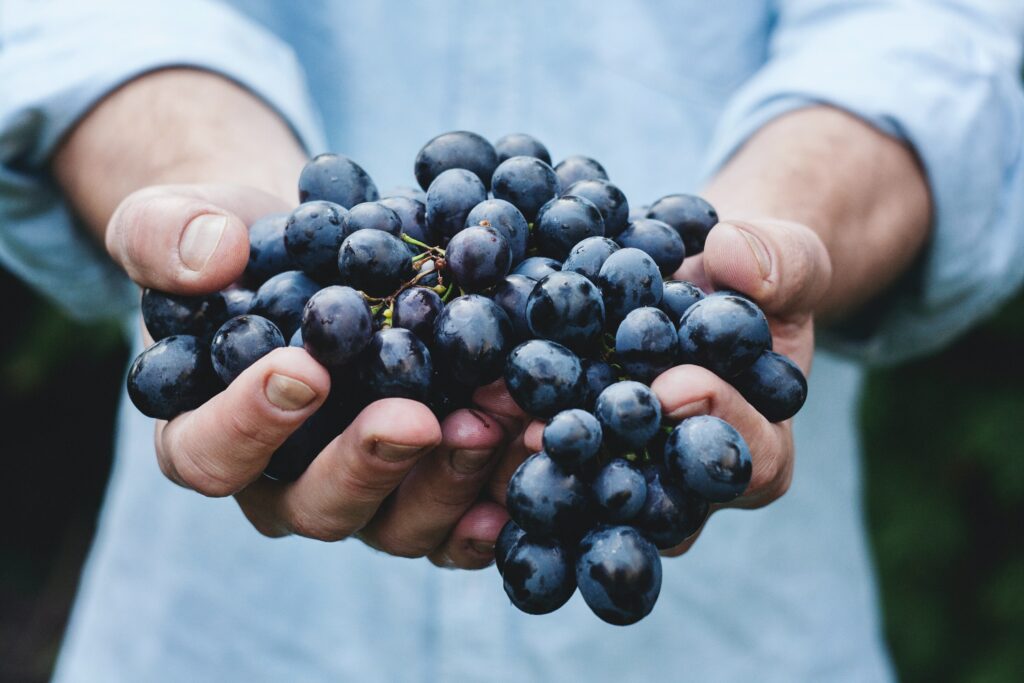
Hands holding grapes

International Women’s Day: Ursula’s Story

“If we want real changes, I think one of the most important things we can do is to better educate people on what equality is.”

Ursula Baertl Espinoza is the Corporate Affairs Manager at Agricola Chapi, an agricultural producer based in Peru. To mark International Women’s Day 2022, we spoke with Ursula about her role, water stewardship, and her experiences working in with AWS.

How would you describe your role?

As the Corporate Affairs Manager, my role is to plan and execute sustainable development programs. Some of these programs include environmental education, how to care for the soil on our farms, and water management. In addition, I manage programs that benefit our workers’ families through the NGO Horizonte. We work with 22 schools where we have organic gardens to help provide children fresh produce to complement the food offered by the state’s meal plan. These gardens have also become spaces for children to learn.

My days are usually busy with meetings to manage and build upon these programs. I also spend time monitoring and evaluating the projects we develop, both in the company’s facilities and for our community. These projects focus on improvements in water management, soil care programs that seek to improve soil moisture and therefore irrigate more effectively, evaluation of the water needs of the surrounding villages, and looking for solutions with the state for these issues.

A lot of my time is invested in spreading understanding of what sustainability is. Many people think sustainability is only about achieving impacts, however it is also about developing long-term relationships with different stakeholders, especially communities. This element of sustainability is often difficult to explain to clients, entrepreneurs, and policymakers. It is even more difficult to implement.

What drew you to working in water in particular?

In our business, agriculture, water is one of the most important, if not the most important, resources. Because of this, our company puts a lot of effort into managing it. However, water is not only valuable as a resource for our business. It is also important for our community, so our focus is to manage water based on the needs of the community as well.

How have you found working with the Alliance for Water Stewardship (AWS) and the AWS Standard?

Being part of AWS has been a great experience, which has led us to better understand our water management, not just within our own operations, but as part of the wider catchment. The tools from AWS strengthen and validate our vision of what we have established as the Chapi Agroecosystem, including mapping the actors and allies at each stage of our water cycle. With AWS tools, we’ve also been able to review and improve our internal policies and programs to help us manage water more effectively, as well as engage in more complex programs that benefit our community more broadly.

However, I believe that nothing is going to really change if we don’t work together. AWS gives us the opportunity to work with allies to better accomplish our water stewardship goals.

What stage would you say you are at in your water stewardship journey?

I would consider our company to be somewhere in the middle of our journey towards water stewardship. We have a very good understanding of how to manage our water and have some clear ideas about the water-related problems we face and their solutions. While we have made progress, we need more concrete actions, both by ourselves and in a joint effort with other stakeholders to continue that progress.

International Women’s Day 2022 asks us to: “Celebrate women’s achievements. Raise awareness against bias. Take action for equality.” Have there been any instances where you have had to overcome gender bias in your role, or support others to do so?

Being a woman in a high position of a company is always a challenge. You are always questioned if you are where you are supposed to be.

Within my team, we have created an environment that considers what both mothers and fathers need to take care of their families, without losing focus on our tasks and objectives. We help each other and have the understanding that we might need to manage time differently. Working from home has helped with this a lot. I would prefer that work is finished late than have a mother who is nervous because her little one is not being attended to

What does International Women’s Day mean to you?

It is a day to remember how much we have accomplished in women’s rights and to communicate the long journey we still have ahead. If we want real changes, I think one of the most important things we can do is to better educate people on what equality is.

International Women’s Day: Sandra’s Story

“The most important thing is to really believe in the value and the contribution we can make for the conservation of water resources, and for society in general.”

Image of Sandra Lima

We speak to Sandra Lima, Corporate Social Responsibility Senior Manager at Dole Tropical Products, based in Ecuador, about her role and commitment to water stewardship. 

How would you describe your role?

In my role at Dole Tropical Products, I design and direct the corporate social responsibility strategy, based on a comprehensive sustainability system at the regional level to cultivate and maintain quality relationships with the company’s stakeholders.  

I also look for new opportunities for strategic alliances and support the advancement of social responsibility programs in the operating divisions.  

What drew you to working in water in particular?

I’ve been working at Dole for more than 25 years, as part of our management system. We have environmental practices focused on efficient use of natural resources. I wanted to continue with this commitment and seek to strengthen water management at Dole with a comprehensive and sustainable approach.

What does a day in your job look like?

Each workday represents the opportunity to seek, build and contribute to the sustainable management of Dole Tropical Products and our commitment and leadership in continuing to operate responsibly in all the countries in which we are present.  Partnerships and collaborative work are essential in this process.  

What does Water Stewardship mean to you?

The Alliance for Water Stewardship (AWS) Standard represented an opportunity to have a more comprehensive vision and approach. With AWS you see beyond the site (farm) to understand our shared water challenges with other stakeholders in the catchment, and search for joint solutions.  

What stage would you say you are at in your Water Stewardship journey?

The AWS Standard is a sustainability water management system promoting continual improvement, and working with the stakeholders on the identified water-related challenges in the catchment. 

We are at the early stages of our journey with AWS. We have started our journey by sharing our experience in sustainable water management with the banana industry and we are inviting others to join.  

How have you found working with The Alliance for Water Stewardship (AWS)/ AWS Standard?

Our experience has been as an enriching challenge, since the first stage of searching for external consultants and identifying the importance of the development of local capacities.  

The planning, interpretation, implementation, communication of our progress in the process is all important, but the most important thing is to really believe in the value and contribution that we can make for the conservation of water resources and society in general.  

What achievement are you most proud of when it comes to water?

We are honored to be part of a group that leads a different and challenging proposal.  At Dole Tropical Products, we are really committed to achieve tangible results that generate a positive impact on sustainable water management.  

What does International Women’s Day mean to you?

International Women’s Day, for me, is a day of commemoration to honor women and men who, in different historical events, have contributed to transform systems, allowing us today and in the future, to have equal rights, greater participation, empowerment and multiple leadership spaces in society. 

IWD 2021 asks: “How will you help forge a gender equal world?” In the context of your work on water stewardship, are there any other female leaders in this space who you think others should know about?

In Ecuador, Colombia, Peru and Germany, in our value chain in the banana industry, there are several women who are committed, and actively contributing to, sustainable water management.  

This leadership and management is one of our keys factors to success in this experience with the incorporation of AWS into our system.