Search

Resource and document centre

Tag: Pharmaceuticals

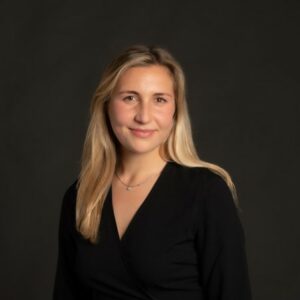
International Women’s Day: Abby’s Story

'Water stewardship should always be a standalone topic within sustainability, but I think its tenets and data will become increasingly valuable to business-as-usual functions as we navigate an unpredictable business, climate and political environment."

We spoke with Abby McGuckin, Water Impact Manager at GSK, an AWS Member, about her role, water stewardship and what International Women’s Day means to her. 

How would you describe your role?

Sustainability at GSK involves protecting nature to make our business more resilient and ensure the ongoing supply of raw materials needed to manufacture our medicines and vaccines – this includes water which is essential in the production of medicines and vaccines and vital for human health. I work to reduce water use and improve water quality across our value chain, both internally at GSK and with external partners and organisations, to deliver on our 2030 nature commitments.

What drew you to working in water in particular?

Water doesn’t behave the way humans want or expect it to. It expands when it freezes. It always finds a crack in the dam. It’s not there when we need it most. Yet, it is the foundation of life, economies and a just future. Given its paradoxical nature, I studied water in both of my degrees.

Now, I have the pleasure of working in water full time. It’s clear that water problems need many different solutions – industrial collaboration, improved valuation, technology, and a convergent policy landscape. I was drawn to water because it allows me to think across these challenges and trends and identify insights to improve our business resilience and contribute to a nature positive world. Personally, I am excited about the water impact technology space – these innovations will help us see, think and do better to solve wicked water problems.

What does a day in your job look like?

It’s full of inspiration. Every day is different but there are common themes in my role. Internally, as a subject matter expert in the central sustainability team, I connect with our reporting, engineering, procurement, and partnerships functions on projects related to our sustainability strategy and the governance of delivering our public commitments. Externally, I participate in working groups from the Water Resilience Coalition, Pharmaceutical Environmental Group, and the Alliance for Water Stewardship. Speaking to my counterparts in pharma and in other sectors is always a highlight of my day!

What does water stewardship mean to you?

It means embracing the way water behaves, no matter how it is unruly from a human perspective. Water stewardship also means exhausting human creativity to protect and conserve this invaluable resource for the communities and ecosystems that depend on it.

What stage would you say you are at in your water stewardship journey?

I can picture the nature transformation opportunity made possible through collective action and value chain engagement, as well as the role I can play in it from a corporate perspective. Water stewardship should always be a standalone topic within sustainability, but I think its tenets and data will become increasingly valuable to business-as-usual functions as we navigate an unpredictable business, climate and political environment.

How have you found working with the Alliance for Water Stewardship (AWS) and/or the AWS Standard?

Exceptional. I am consistently impressed by the ambition and quality of the AWS team, which is reflected in the Standard. I regularly use AWS materials and champion the AWS Standard as the definition and foundation of good water stewardship. I’m looking forward to V3.0!

What achievement are you most proud of when it comes to water?

Our approach to water stewardship at water-stressed sites is to 1) avoid or reduce the site’s operational impacts, 2) replenish or restore the site’s operational footprint, and 3) collaborate with stakeholders in the basin on shared water challenges towards collective action wherever possible. 

We’re delivering on this approach in the Godavari Basin, where our GSK Nashik site and key suppliers are located in India. This is made possible through dedicated on-site teams and local and international partners, such as the Watershed Organisation Trust (WOTR) which is delivering water replenishment and WaterAid’s Women+Water Collaborative (established alongside Gap and Cargill) which is increasing climate resilient WASH access. To amplify our impact, GSK has formally committed to become Godavari’s Basin Champion, a Water Resources Coalition initiative to drive positive water impacts in 100 priority basins by 2030. We are also stepping up our commitment with Lisa Martin, GSK’s Chief Procurement Officer, taking on the role of Basin Champion for the Godavari basin. This C-Suite endorsed initiative solidifies our ongoing commitment to the Godavari. For this, I am extremely proud!

What does International Women’s Day mean to you?

It’s a time to reflect on progress made on inclusion and empowerment, level-set new ambitions and identify my role in them. It also means reflecting on my privilege and, within the water context, the fact that access to clean water, sanitation, and hygiene varies dramatically around the world – especially for women who are typically responsible for domestic, water-related chores. For IWD this year, I’m going to take time to prioritise my objectives for inspiring inclusion in 2024.

IWD 2024 asks us to ‘Inspire Inclusion’. Have you experienced moments in your career where feeling included led to positive outcomes?

Absolutely. In fact, these have been defining milestones in my career. This is especially true in my current role at GSK, where colleagues across the organisation regularly ask me for my point-of-view and recommendations – on water topics and beyond. The simple act of asking for my opinion, especially as a woman earlier on in her career, immediately made me feel like an important part of the organisation and that I have a role to play in shaping its future. This goes hand-in-hand with being empowered to take on new responsibilities, including leading initiatives that I’ve recommended we pursue together. Asking questions, listening to opinions, and delegating responsibilities are fundamental to developing leadership and doing so from an inclusivity mindset embodies the 2024 IWD theme.

In the context of your work on water stewardship, are there any other female leaders in this space who you think others should know about?

Definitely!

  • Madhavi Kadrekar – WOTR, Fundraising Strategist
  • Caroline Black – Gilead, Climate and Water Stewardship Senior Manager (formerly WRI)
  • Sharai Gossart – GSK, Sustainability Project Lead (facilitating AWS implementation at GSK)
International Women’s Day: Sarah’s Story

“To catalyze the transition from water management to water stewardship… a shift in how we talk about water is imperative.”

Sarah Argoud, AstraZeneca

We spoke with Sarah Argoud, Global Sustainability Natural Resources Lead, AstraZeneca, about her role, water stewardship and what International Women’s Day means to her.

How would you describe your role?

My day-to-day work is focused on influencing and inspiring action. Success is when my efforts make it easier for AstraZeneca to contribute to the Global Goals for Sustainable Development (SDGs), especially for water and responsible consumption and production. The purpose of my role is always about the connection to the big picture of how to best contribute to global aims to care for the planet, whether it’s by developing internal targets, frameworks and programmes that clarify what we need to do; securing and managing central funding to support our delivery; sharing what we’ve done through presentations and reporting; or partnering externally to progress these efforts.

What drew you to working in water in particular?

I grew up in Southern California in the US where droughts make for regular dinner-time conversation. As I started my career in the pharmaceutical industry, I worked in manufacturing and was quite proud of the impact I was making for patients who needed the medicine we supplied. But seeing how much water was required just to clean one storage tank from batch to batch seemed like quite a large trade-off. Finding my way into a role where I could continue to be part of the sector’s efforts to improve health outcomes while also driving to minimize its impact on nature and local basins is quite a privilege.

What does a day in your job look like?

Every day in my role involves connection with stakeholders, both within AstraZeneca and beyond. As a science-led company, there is a lot of time spent considering what data we have to support the decisions we make, and a lot of consideration of the risks as we prioritize our efforts. One of the aspects of my role that I enjoy most is interacting with site and supplier facing colleagues based across the world to learn more about what their challenges are and how they are connecting with their communities to address them. These experiences are immensely helpful to inform how I focus my time to better support them in these efforts. I also really enjoy the transparency that I can bring to the role, sharing our learnings while benefitting from those presented by other companies and sectors.

What does water stewardship mean to you?

Water is so important to society and the natural world around us, but it is also very easy to take for granted. Bringing the value of water to life in a way that your stakeholders can personally connect to is critical to water stewardship and the systems thinking it requires.

What stage would you say you are at in your water stewardship journey?

I transitioned from a career in manufacturing to my role in sustainability quite recently, so it often feels like my water stewardship journey is just getting started. As a quick learner and one who does not shy away from asking questions, I see my fresh perspective as one of the greatest strengths that I bring to my role and the broader community working in this space. Despite my passion and drive to accelerate my learning, it’s not uncommon for me to get a bit tripped up in the complexity.

To catalyze the transition from water management to water stewardship at the scale that is needed, a shift in how we talk about water is imperative. Communicating the benefits of stewardship and making the roadmaps more widely accessible must be amongst our top priorities to successfully drive change.

How have you found working with the Alliance for Water Stewardship (AWS)/AWS Standard?

The AWS Standard is quite helpful as the “how” for sites across sectors located anywhere in the world. And the translations to many different languages are a major benefit for my colleagues to understand what they need to do, especially when it comes to the more technical aspects of the Standard.

What achievement are you most proud of when it comes to water?

Connecting with people through my daily interactions is the most rewarding part of working in water, whether it’s a meeting to discuss a nature restoration project or sharing what I’ve learned with one of my water-wise neighbors while chatting about the health of our local creek where our kids like to explore. The moments when I have inspired someone to think differently about their own abilities to drive change, or to join the proverbial “ripple to become the wave”, are my proudest.

What does International Women’s Day mean to you?

When I reflect on how past generations would view the leading roles many women have across various organizations, it’s quite inspiring and something to be incredibly proud of. Yet as we’re making progress and benefitting from more diverse perspectives in some geographies, many women around the world are losing the ground they have gained. Our work in water has a major role to play, including WASH to enable education and opportunity to women and creating more technical jobs where women can make a big impact worldwide.

IWD 2023 asks us to: ’embrace equity’. Have there been any instances where you have embraced equity in your role, or supported others to do so?

Creating an inclusive environment underpins everything I do within my role. Everyone we work with has a different story and unique hurdles to overcome in order to deliver the intended outcome. You enable a much richer outcome by making it safe for everyone involved to bring their whole self and come with curiosity. I am at my best when I can say “I don’t know” or “I need help” without fear or embarrassment and I strive to create that environment for others. This can be as simple as acknowledging and appreciating language barriers or neurodiversity in discussions, slowing down or offering other methods of communication for technical topics.

Are there any other comments that you would like to add?

Working in water has been a great privilege and I am incredibly grateful to everyone within the community for their acceptance and appreciation of how diversity only strengthens our approach.

Women in Africa

International Women’s Day: Laura’s Story

“Water is a shared resource; we all need it to live. It’s at the foundation of everything – our food, our energy, our industries, our lives.”

Laura Kowalski

Laura Kowalski, Sustainability Program Manager at Ecolab, based in Illinois, USA, speaks to us about Water Stewardship means to her on International Women’s Day 2021. 

How would you describe your role to someone who may be unfamiliar with your area of work?   

I help enable our manufacturing plants to meet our public goals around water reduction, water stewardship, and carbon reduction.  

What drew you to working in water in particular? 

Water is a shared resource; we all need it to live. It’s at the foundation of everything – our food, our energy, our industries, our lives. It’s exciting to be able to do work in such a meaningful field. I also love that we are always learning more and building. We have to continuously learn to adapt to new situations and we can really see the impact of our work.

What does Water Stewardship mean to you? 

Water stewardship means managing a shared resource to the fullest, in the most responsible way from an environmental, social, and economic perspective. Being efficient but also respectful of others needs as it relates to water. 

What stage would you say you are at in your Water Stewardship journey?

Ecolab was a founding member of AWS and had the first ever certified plant in Tai Cang, China. We continue to lead and advocate for global water stewardship not only in our manufacturing plants but with our customers, as well.  

How have you found working with The Alliance for Water Stewardship (AWS)/ AWS Standard? 

AWS has allowed us to open up a conversation with our plants to look outside of the four walls of our site into the local community in which we operate.  

What achievement are you most proud of when it comes to water?

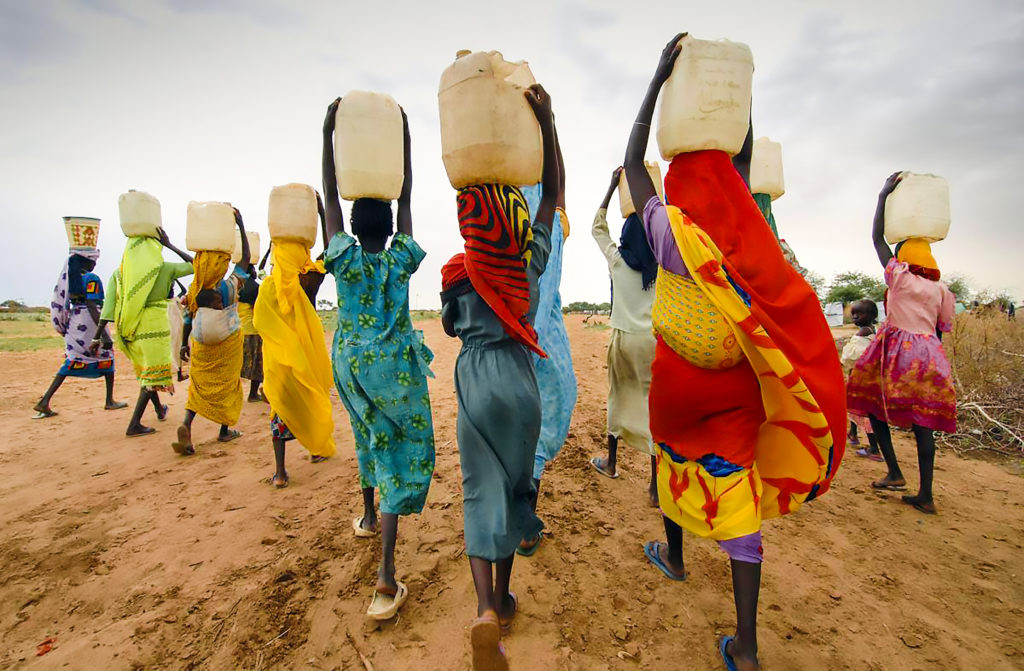
In 2018 I gave a TED talk called “Water Scarcity is Sexist”. This talk discussed water scarcity in Africa and how the burden of water and collection of water is placed on women.  

While women are out fetching water, their male counterparts are gaining an education or seeking other life skills that they can be compensated for. They’re learning to become active members in their communities, not just in their households. 

Development of water infrastructure requires the input of the people most affected by water issues in the region – women. Yet women are often pushed out of community planning or political conversations because it isn’t seen as their place. 

Giving women a seat at the table allows economies to develop in ways that will let them function properly! 

Watch Laura’s TED Talk here.