
Search

Resource and document centre

Tag: Textiles

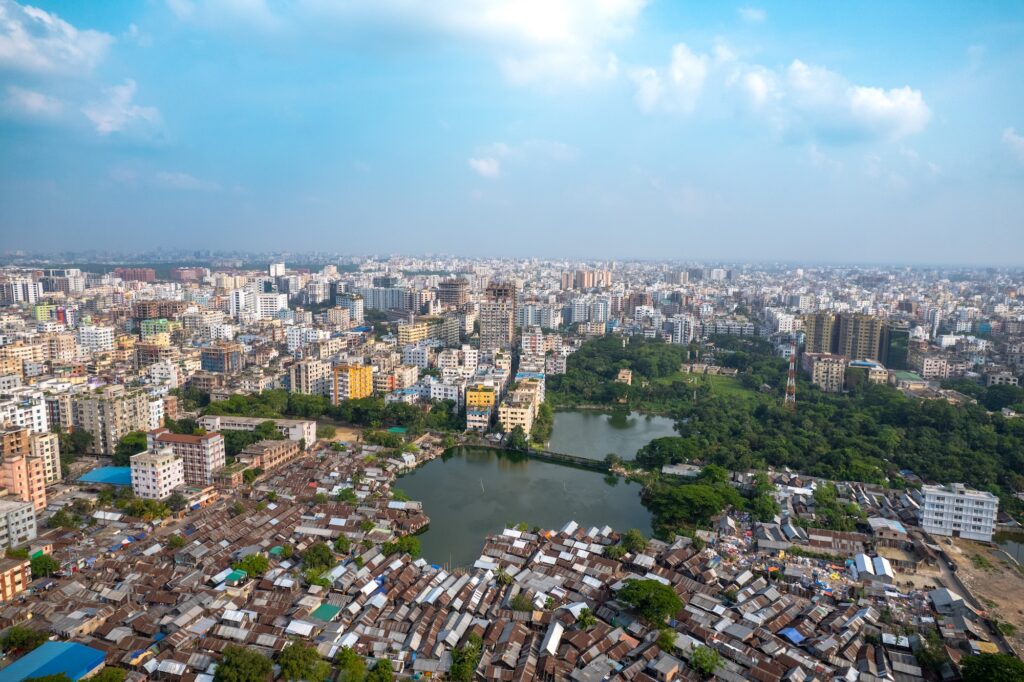
An aerial image of Dhaka, Bangladesh

Textile suppliers in Dhaka commit to water stewardship, backed by Primark

Sixteen textile and apparel suppliers in Dhaka, Bangladesh, have signed and publicly disclosed their commitment to water stewardship. The suppliers publicly disclosed their commitment through official websites, factory noticeboards, and social media platforms.

All 16 sites have committed to water stewardship by implementing the AWS Standard, marking a significant milestone for the AWS Collective Action Accelerator – a programme designed to accelerate water stewardship by uniting sites within the same catchment to work collectively.

AWS recognises Primark for supporting 15 participating sites and thanks Zaber and Zubair Fabrics Ltd. for independently advancing their water stewardship efforts through participation in the programme.

Participating sites:

  • Echotex Ltd.
  • Bengal Hurricane Dyeing and Printing (Pvt) Ltd.
  • International Classic Composite Ltd.
  • Labib Dyeing Mills Ltd.
  • Windy Laundry Ltd.
  • Far East Knitting Dyeing Industries Ltd.
  • Tarasima Apparels Ltd.
  • NRG Composite Yarn Dyeing
  • Ibrahim Knit Garments Pvt Ltd.
  • Fakir Apparels Ltd.
  • Fakir Knitwears Ltd.
  • Modele De Capital Ind Ltd.
  • NRG Knit Composite
  • S.B Style Composite Ltd.
  • Comfit Composite Knit Ltd.
  • Zaber and Zubair Fabrics Ltd. 

Primark became an AWS Funding Member in 2022, reaffirming the company’s leadership and commitment to water stewardship. Since joining the inaugural AWS Collective Action Accelerator in Bangladesh, Primark has participated in additional programmes in China and India, supporting a total of 20 factories in priority river basins.
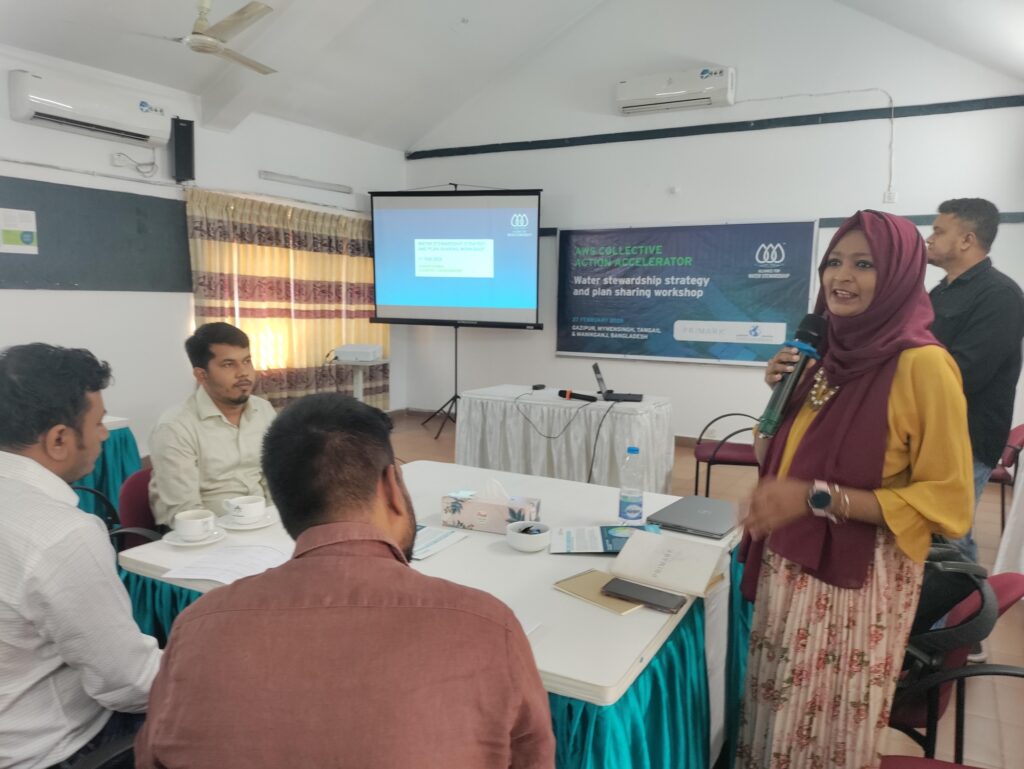
A woman speaking at a knowledge sharing workshop as part of the Collective Action Accelerator in Dhaka Bangladesh

A workshop held as part of the AWS Collective Action Accelerator in Dhaka, Bangladesh.  

“The AWS Collective Action Accelerator in Dhaka is one of our flagship water stewardship projects involving 16 strategic suppliers in Bangladesh. Whilst we also engage with these suppliers on various resource efficiency projects, the accelerator programme has been instrumental in driving elevated site-level performance, as well as in shifting our suppliers’ mindset towards viewing water (and associated challenges) as a shared resource that can only be effectively tackled when working collectively. This means looking beyond their own fence lines, understanding and influencing what industry neighbours are doing, and even collaborating and sharing best practices with other textile suppliers.”

Lewys Isaac

“We are proud to share this significant milestone in the inaugural AWS Collective Action Accelerator in Dhaka, Bangladesh. By presenting a united front, the participating textile and apparel suppliers have gained more attention and support from local stakeholders. We would like to recognise Primark for its role in supporting the project. Primark has created a space for its suppliers to act together, aligning commercial goals with sustainability ambitions.”

Shahid Kamal

AWS is scoping for a second round of sites to participate in an AWS Collective Action Accelerator in this location. Please contact us for more information.
International Women’s Day: Tanzida’s Story

“Working with AWS has taught us the importance of a collaborative approach to address water-related challenges.”

We spoke with Tanzida Islam, Programme Manager – Environment at H&M Group, about her role, water stewardship and what International Women’s Day means to her.

How would you describe your role?

As an Environmental Program Manager at H&M Group (Bangladesh Production Office), my role is to plan and execute sustainable programs with a focus on areas related to water, climate and chemical management to improve the environmental sustainability of factories supplying to H&M. I work with various stakeholders to drive industrial change with shared responsibilities, ranging from government to non-governmental organizations and business sectors.

What does a day in your job look like?

A typical day in my job involves planning and prioritizing daily deliverables, attending internal and external meetings and conducting organized factory visits. These engagements help me to understand the progress of our sustainability programs. Another crucial aspect is to secure business alignment with factories’ environmental sustainability performance, which requires building internal and external capacity.

What does water stewardship mean to you?

Water Stewardship means going beyond the fence line to benefit communities. In my view, we are at the foundational stage of our water stewardship journey. Since we are not the only brand present in the river basin, collaboration with stakeholders is necessary to achieve good outcomes. One example of this is our collaboration with the Alliance for Water Stewardship, together with other clothing brands, supplier factories and local communities in three prioritized locations: Gazipur, Narayanganj and Savar in Bangladesh. We have made progress and still have a long way to go.

How have you found working with the Alliance for Water Stewardship (AWS)/AWS Standard?

Working with Alliance for Water Stewardship has taught us the importance of a collaborative approach to address water-related challenges. We have also learned to assess five outcomes (good water governance; sustainable water balance; good quality water status; important water-related areas; and water, sanitation and hygiene) using the AWS five-step method. It provides a clear understanding of what is needed to reduce water consumption, tackle water pollution and establish good water governance in high-risk basins.

What does International Women’s Day mean to you?

The meaning of International Women’s Day for me is to support women’s voices and actions in society without fear of any repercussions. This day gives us a chance to celebrate the accomplishments of women and their contributions to our community. Additionally, it is a day where we acknowledge the barriers that need to be removed for women to aspire and achieve their life goals.

IWD 2023 asks us to: ’embrace equity’. Have there been any instances where you have embraced equity in your role or supported others to do so?

Equity means to strive for fair treatment, access, equal opportunities and advancement for everyone while identifying and removing barriers that prevent certain groups from fully participating. As a woman, my career journey was not easy, and there were times when I needed support, acceptance and trust from others. Now, I believe it’s my turn to provide support to someone else. I am an inclusive person who respects others’ uniqueness in an empathetic, unbiased way. I love to build relationships and value the opinion of others. However, in our culture, it can be challenging for women to raise their voice. Fortunately, my work environment is quite inclusive and encourages diversity.

In the context of your work on water stewardship, are there any other leaders in this space who you think others should know about?

I would like to share the name of Hasin Jahan, Country Director for WaterAid Bangladesh. She is focused on transforming the lives of the most marginalised people to ensure safe water, sanitation, and hygiene (WASH). Her work to promote WASH in marginalised communities makes her an excellent example of water leadership in Bangladesh.

International Women’s Day: Nazia’s Story

“One of the most pressing issues that Pakistan faces at this moment is the water crisis.”

Nazia Mughal is the Manager of Sustainability and Water Management within the Garment Division at Soorty Enterprises Pvt Limited, based in Karachi, Pakistan. Here, Nazia shares her experience of working in water stewardship on International Women’s Day, 2021.

How would you describe your role?

I’ve been working in Soorty Enterprises Pvt Limited for the past six years as the Manager of Sustainability and Water Management. My responsibilities include: factory water management, wastewater treatment plant operations, maintenance, troubleshooting and working on water and wastewater sustainability.

What drew you to working in water?

One of the most pressing issues Pakistan faces at this moment is the water crisis. As business leaders plan for the future, they scan for opportunities and risks created by emerging trends that may impact their company, industry, customers, and the world.

There are now signals, some faint, that water is emerging as an issue of strategic importance to business. Clean drinking water and sanitation for all is one of the biggest global challenges of the 21st century and businesses have an important part to play.

We can lead by example by providing these basic services in our direct operations, but what will really drive transformational change is enabling provision across our extensive supply chains. This is how we can leverage our influence and achieve the scale that is desperately needed.

These are all reasons why I decided to start my professional career in water leadership.

What does a day in your job look like?

My day starts with the reporting of how much water is received from different sources and monitoring the consumption and percentage of water used for production, utilities as well as domestic irrigation, and for kitchen purposes.

I will then follow up on routine work such as maintenance or troubleshooting within the plant. Usually, I’ll have a meeting with Head of Sustainability to update them about the wastewater treatment and recycle operations. Throughout my day there is also a lot of monitoring of water-related costs and checking compliances and sustainability.

I’m also involved in the training and development of employees, including sanitation and hygiene initiatives with the training development department.

What does Water Stewardship mean to you?

Water stewardship is based on the premise that all water users play a role in the sustainable management of water resources, and that a single actor working alone cannot effectively address complex water issues that are often caused by poor water management.

Water stewardship approaches are, therefore, based on collective responses. Businesses increasingly realize the need to take responsibility for their role in promoting sustainable water use and management through collective action initiatives to address water-related risks in their operations and supply chains. Water stewardship is the mechanism through which businesses and other organizations can contribute to water security efforts and Sustainable Development Goal #6: To Ensure availability and sustainable management of water and sanitation for all.

What achievement are you most proud of when it comes to water?

At Soorty Enterprise Pvt Limited we have been working with AWS since 2019 and both of our sites are AWS Certified.

We achieved the first Gold-level certification in water stewardship in Pakistan. I was proud to lead the whole journey towards AWS Standard Certification.

What does International Women’s Day mean to you?

International Women’s Day is a time to reflect on progress made, to call for change and to celebrate acts of courage and determination by ordinary women, who have played an extraordinary role in the history of their countries and communities.

International Women’s Day continues to be a powerful platform globally that unifies tenacity and drives action for gender parity, while celebrating the social, cultural, economic and political achievements of women.