
Search

Resource and document centre

Year: 2026

A community alongside a river. iStock/ Richard Johnson

Scott McCready appointed AWS Acting CEO

The Alliance for Water Stewardship (AWS) today announce the Board of Trustees’ appointment of Scott McCready as Acting Chief Executive Officer, following yesterday’s announcement that Adrian Sym would be stepping down. With over 10 years at AWS, most recently as the Chief Strategy Officer, Scott has been instrumental in the evolution and growth of the organisation and takes up the post of Acting CEO today.

“As AWS continues to drive leadership in credible water stewardship, I am pleased to support the organisation, colleagues and members as Acting CEO. Our focus will continue to be on supporting our multi-stakeholder community as we work together to build a water secure future. There are many exciting milestones in the weeks and months ahead, not least looking forward to welcoming everyone to the 2026 AWS Forum in June,” said Scott.

AWS Board Chair Max Wiesendanger said, “We are very pleased to have Scott step into the role of Acting CEO at AWS. With his experience and dedication to water stewardship, he has the Board’s full support.” Scott will serve as Acting CEO while the Board undergoes a formal process to identify the next CEO for AWS.

River Tyne, UK. iStock/rruntsch

AWS Leadership Transition: A message from AWS Board Chair Max Weisendanger

In 2011, Adrian Sym was appointed as the first Chief Executive of AWS. After 15 years of service, and with the recent launch of Version 3.0 of the AWS Standard, Adrian and the Board have agreed that the time is right for Adrian to step down as CEO and open the next leadership chapter for AWS.

Under Adrian’s tenure, AWS has become firmly established in its intended role as a credible, ISEAL compliant standard system that is widely respected by stakeholders around the world, with our multi-stakeholder members at the forefront of leadership in water stewardship.

The Board would like to express its gratitude to Adrian for his service to the organisation and its deep appreciation for his dedication and tireless efforts in pursuit of our mission to ignite and nurture leadership in credible water stewardship.

The Board will appoint an Acting CEO and will shortly begin a formal process to identify the next CEO who will guide AWS through the next phase of the organisation’s growth and impact.

Moments of transition are also moments of opportunity, and we look forward to building on the accomplishments of the last 15 years to further advance our work forwards a water secure future for all.

Aerial View of City with River and Greenery in Salto, Brazil. Pexels/Junior Camargo

Build the skills to implement the AWS Standard Version 3.0

Written by Gracia Plenita Agnindhira, AWS Training and Development Manager

Water stewardship enables water users to work together towards common goals for sustainable water management and shared water security. It encourages large water users, or sites and organisations, to move beyond their fencelines by engaging with stakeholders in their catchments and helping to drive benefits for businesses, communities and nature.

The Alliance for Water Stewardship (AWS) convenes organisations to share knowledge, advance innovation in water stewardship practice, and support the uptake and evolution of the AWS Standard. Whether your organisation is getting started or already implementing advanced water stewardship, building the right knowledge and skills helps translate ambition into meaningful actions.

Structured learning builds internal confidence, accelerates progress and ensures more coordinated efforts which align with globally recognised best practice, the AWS Standard.

 The AWS Standard System Training is designed exactly for this purpose.

With the launch of AWS Standard Version 3.0 on World Water Day 2026, our flagship AWS Standard System Training course has been fully updated to support practitioners in implementing the new version. The updated course will equip you with the knowledge and practical understanding required to apply the requirements in the AWS Standard V3.0 with confidence.

What’s new in AWS Standard System Training?

  • Strengthened logic behind target setting in the development of the water stewardship plan, with the inclusion of double materiality to support risk identification and prioritisation.
  • New insights into how water stewardship can help build catchment resilience to climate and water crises.
  • More clarity on continual improvement from implementing the AWS Standard’s Core, Gold and Platinum requirements
  • New and improved interactive exercises to strengthen conceptual and practical understanding of AWS Standard’s requirements in Step 1 and 2.

The AWS Standard System Training is not just about learning about compliance to the Standard’s requirements. It is about providing a starting point to build the foundations for leadership in water stewardship using the AWS Standard V3.0 as a framework for action. It equips professionals to understand impacts and dependencies on water, prioritise risks and collaborate more effectively with others in their catchments.

We believe water stewardship is more impactful when it is built collectively across catchment, and shared with the broader community.

 AWS Training Programme offers wide-ranging training courses to support the needs from our stakeholders and the general public. AWS training participants come from various professional backgrounds with different levels of experience, but they typically share a common goal: to drive change where it matters most.

Our training courses are offered in multiple languages and provide options enabling participants to decide which will best support them in building a structured understanding of water stewardship.

If your organisation is ready to take the next step, or if you are looking to build your own expertise in water stewardship, the AWS Training Programme and our training courses offer a practical and inspiring place to start.

AWS Standard Version 3.0 launches at event in Tokyo, Japan 

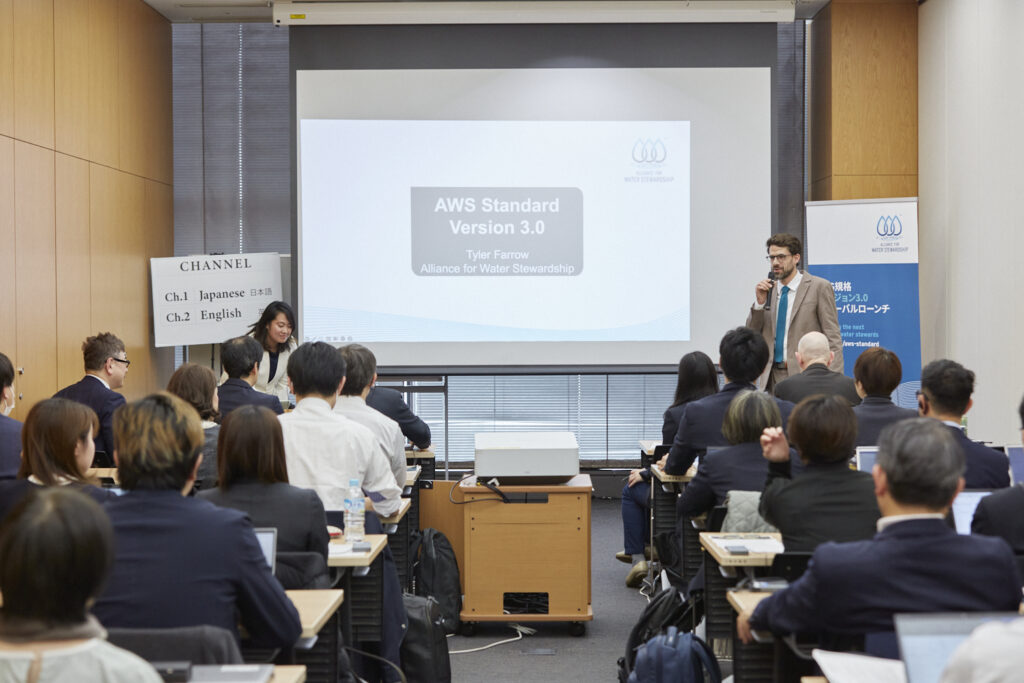
The Alliance for Water Stewardship (AWS) held the official launch of the AWS Standard Version 3.0 in Japan on 18 March 2026, hosted at the Suntory World Headquarters in Tokyo, Japan. The event brought together water stewardship practitioners, corporate members, NGO representatives and certification professionals to mark a significant milestone in the evolution of the AWS Standard. 

The event was emceed by Mei Haneo of WWF Japan and opened with a warm welcome from Harumichi Seta, Senior General Manager of the Sustainability Management Division at Suntory Holdings Ltd., before AWS CEO Adrian Sym delivered the opening remarks, setting the tone for the day and underscoring the importance of the updated AWS Standard Version 3.0 in addressing global and regional water challenges. 

AWS Standards Manager Tyler Farrow then provided a comprehensive introduction to AWS Standard Version 3.0, walking attendees through the key changes from Version 2.0 and outlining the pathways available for organisations seeking certification. An extended Q&A session followed, facilitated by Mei Haneo and Tyler Farrow, giving participants the opportunity to explore the practical implications of the updated Standard. 

This was followed by a valuable perspective from Satoru Yukioka of Chugai Pharmaceutical, who shared their experience of pursuing AWS certification and the benefits it has brought to their operations. 

AWS Japan Sector Coordinator Kei Namba then presented on the opportunities for water stewardship in Japan, highlighting the local context and the growing momentum behind corporate water action in the region, before introducing the Japan Water Stewardship (JWS) initiative and outlining how organisations can get involved. 

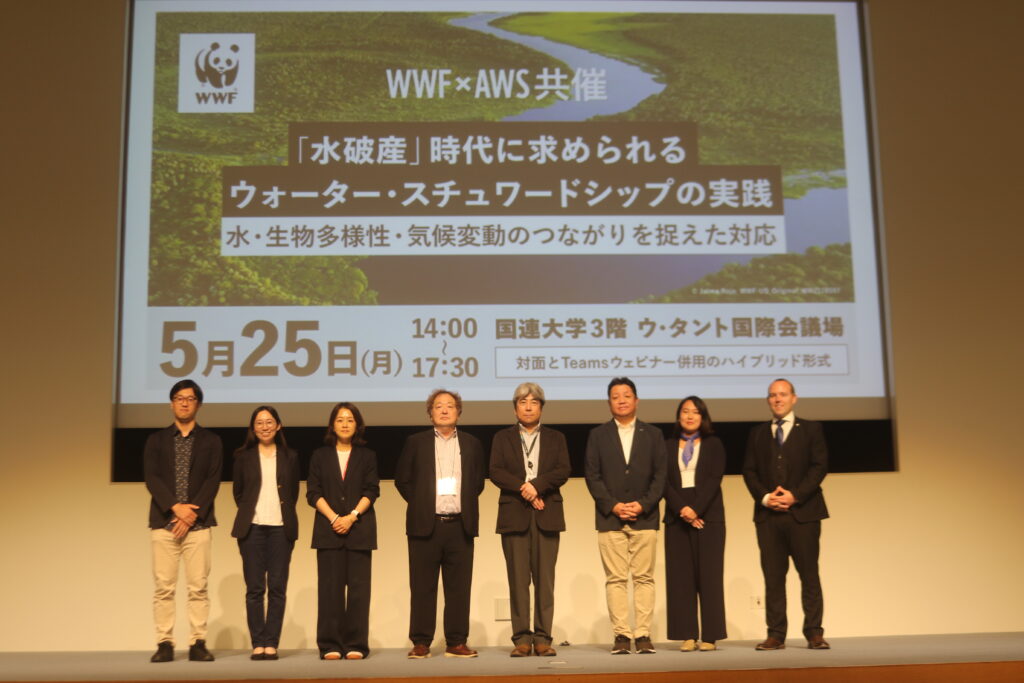
The launch ceremony closed with remarks from Alexis Morgan of WWF, who reflected on the influence of the Standard from an NGO perspective and offered a personal view on what Version 3.0 means for the broader water stewardship community. Kei Namba delivered the formal closing before attendees gathered for a group photo to mark the occasion. 

Following a short break, an optional afternoon session titled ‘From Standard to Real Actions: Advancing Water Stewardship with AWS Standard Version 3.0’ provided participants with a practical introduction to implementing the Standard.

Introduced by Kei Namba, the session featured a series of presentations by Tyler Farrow covering how to define site boundaries and catchments of relevance, the role of stakeholder engagement across all five steps of the AWS Standard, and how to set water stewardship plans and targets by understanding impacts, dependencies, risks and shared water challenges. 

Water Stewardship Assurance Services (WSAS) Auditor Naoya Ogawa then shared information about the certification process and insights from his experiences auditing sites. AWS CEO Adrian Sym brought the day to a close with final remarks. 

The Tokyo launch marked an important step forward for water stewardship in Japan and the wider Asia-Pacific region. With growing corporate interest in responsible water management and a strong network of stakeholders already engaged through JWS, the release of the AWS Standard Version 3.0 arrives at an opportune moment. AWS looks forward to supporting organisations across Japan and beyond as they work towards certification under the new Standard.  

“AWS Standard Version 3.0 strengthens clarity, supports inclusivity, and enables more effective action in the face of water challenges that are becoming ever more complex. In a world in which the water cycle is intensifying, climate change is increasing unpredictability, water quality concerns are growing, and businesses face rising scrutiny and consumer expectations, Version 3.0 equips companies to respond to these realities with greater confidence and effectiveness. ”

Photos from the event

Meandering river in Montenegro. Popartic/iStock

AWS unveils upgraded global water standard ahead of UN World Water Day

Tokyo / London, 18 March 2026 – The Alliance for Water Stewardship (AWS) today announced the launch of Version 3.0 of the International Water Stewardship Standard, giving companies a strengthened framework to manage growing water risks and disclosure demands.

The globally recognised AWS Standard is being launched at an in person event at Suntory World Headquarters in Tokyo, ahead of UN World Water Day on 22 March, which this year again highlights the urgency of protecting freshwater resources for people, nature and economies.

Water risk and regulation on the rise

Global water risks are accelerating. Floods, droughts and water pollution are impacting production, logistics and communities across every region. One in five companies now reports significant water related supply chain risks with tens of billions of dollars of value at risk, while a growing share of global GDP is generated in regions facing high water risk. Environmental risks, including extreme weather and ecosystem decline, remain among the most severe global threats over the next decade.

“Water is now a board level risk as water related shocks are already disrupting supply chains and undermining business continuity. The newly revised AWS Standard 3.0 provides a practical and trusted framework for companies in any sector to act on those risks, work with others in their catchments, and through third party certification, show investors, regulators and communities that their claims of good water stewardship are real.”

At the same time, regulators and standard setters are tightening expectations around environmental claims and water reporting. The EU Corporate Sustainability Reporting Directive (CSRD) and related European Sustainability Reporting Standards (ESRS), including ESRS E3 Water, as well as evolving rules in the UK and other jurisdictions, require companies to demonstrate robust management of environmental impacts and dependencies.

Certification to the AWS Standard 3.0 is carried out by independent third party auditors. Certified sites report benefits including improved relationships with local communities and authorities, increased investor confidence, enhanced brand reputation, better water quality and balance, groundwater recharge, new habitats and lower costs through reduced water use and greater efficiency.

“Healthy rivers, aquifers and wetlands are critical natural infrastructure for climate resilience, food security and human well being. By aligning corporate action with catchment scale priorities, AWS Standard Version 3.0 can help businesses contribute to restoring and protecting these systems, while also managing their own risks and dependencies on water.”

What is new in Version 3.0

Version 3.0 of the AWS Standard builds on a decade of implementation and evidence. In 2023, AWS reviewed Version 2.0 and, based on a global survey, decided to undertake a major revision. Between 2024 and 2025, AWS conducted two rounds of global public consultation and received more than 3,000 comments from over 100 organisations and individuals. The revised Standard 3.0 was adopted by AWS Members in December 2025, with 93 percent of votes in favour.

An independent evaluation of Version 2.0 found that use of the AWS Standard delivers clear social, environmental and economic benefits, from better community engagement and groundwater recharge, to improved access to WASH, new habitats and job creation linked to more reliable water flows.

“WaterAid welcomes AWS Standard 3.0, which reaffirms safe water, sanitation and hygiene as a core pillar of credible water stewardship. The new Standard offers clearer, more streamlined requirements and stronger alignment with climate resilience and catchment health - enabling organisations to deliver more reliable, equitable and sustainable WASH outcomes for communities.”

A growing group of global brands across multiple sectors are already using or engaging with the AWS Standard, underlining its relevance for mainstream business. They include consumer goods and food companies such as Nestlé, Diageo, Unilever, The Coca Cola Company and Suntory Holdings Limited, technology businesses such as Apple, Cisco, Samsung, healthcare companies Haleon and AstraZeneca, retailers such as Primark and automotive manufacturers such as Audi.

"We are already seeing the impacts of climate change through water, from disappearing rivers and wetlands to more frequent floods and droughts. The AWS Standard helps companies move beyond narrow water efficiency and look at the whole catchment to help safeguard the freshwater ecosystems we all rely on. As a supporter from the beginning, WWF is pleased to see the launch of the AWS Standard V3.0, which refines the current gold standard for water stewardship by streamlining requirements and strengthening alignment with other sustainability priorities.”

As the world marks UN World Water Day and World Water Day week, AWS is calling on companies, investors and financial institutions in all regions to put water at the centre of their climate and nature strategies. Organisations are invited to download the AWS Standard Version 3.0 below, join an online launch webinar and contact AWS to explore how to begin or accelerate their water stewardship journey and move towards certification across priority sites and supply chains.

Nestle Buxton Factory Site - Platinum certified site

AWS Member Spotlight: Nestlé

Water stewardship is not just a corporate social responsibility (CSR) ‘nice to have'... it is a boardroom priority and the backbone of our business strategy.

As our first Member Spotlight, we are proud to feature Nestlé, a long standing AWS Funding Member, whose leadership, commitment and on-the-ground action continue to set a high bar for what responsible water stewardship looks like in practice. In the following Q&A, Mickaël Clément, Head of Water Stewardship at Nestlé Waters & Premium Beverages, reflects on their journey, the lessons learned, and what it means to achieve their landmark corporate commitment as the first food and beverage company to certify all its owned bottling sites to the AWS Standard.

Nestlé has been a long-standing member of AWS. Can you tell us how you became interested in water stewardship and why it is important to Nestlé?

Water stewardship is not just a corporate social responsibility (CSR) ‘nice to have’ for Nestlé Waters & Premium Beverages – it is a boardroom priority and the backbone of our business strategy. For us, it’s more than a question of building resilience – we want to deliver positive impact beyond our factory gates too. Besides our commitment to certify all our bottling sites to the AWS Standard, we have also implemented around 70 projects in 20 countries in collaboration with local communities, partners and experts to address shared water challenges and deliver tangible, long-term impact. This important work not only protects water security, it enables nature and communities to thrive. With more than 30 years’ experience and impact, we are also dedicated to sharing knowledge and learnings to help scale solutions and fuel more collective action.

Nestlé was the first company to make a global corporate commitment to AWS certification. We would like to congratulate Nestlé and Nestlé Waters on meeting this goal and certifying all your owned bottling sites. Can you share with us what that achievement has meant to Nestlé?

Thanks!  It’s a landmark achievement for our business, and a huge source of pride for everyone involved.  It’s a commitment we set for ourselves to achieve by 2025, only made possible by investment, capability-building and of course the care, passion and expertise of local teams at our sites.  Of course, the work doesn’t stop here!  Our water stewardship journey continues, with ambitions to maintain our AWS certifications and strengthen our water regeneration plans for even greater impact.  The AWS Standard give us a clear and rigorous framework to guide our actions.

What are the most important lessons you have learned along this journey?

First and foremost, we know that while water is a global issue, its stewardship must be handled at local level. You can’t manage water from headquarters! You need boots in the watershed and people who understand the challenges and are empowered to build authentic, collaborative relationships with local communities and experts to identify and co-create solutions.  This localised approach is particularly critical when it comes to AWS certification.  It’s one thing to have achieved this across all our 39 bottling sites, now we need to maintain the certification.  That requires continued commitment by the teams on the ground.

Secondly, with stakeholder engagement being such a key element of the AWS Standard, we were able to leverage the strong relationships we had already established with stakeholders and communities long before the AWS certification process.  Again, it’s critical to empower people on the ground to build these relationships with the local communities they are part of, they truly understand the context.

Finally, to achieve AWS certification, we’ve invested in training our teams and developed tools to help them in their work.  We have learned so much from the process, which we share across our teams to help accelerate and scale our solutions and impact.

The Forum this year comes at a critical reflection moment and opportunity for us all. So come and be open to our ‘water stewardship immersion’. Join us as we reflect, listen and journey together – with old and new friends. There is space for all of us!

How has AWS Certification helped Nestlé create value for the communities and catchments where your bottling sites operate?

Every one of our 39 bottling sites is different, with its own unique context and challenges to consider and as such, it requires a highly tailored approach to achieve the rigorous AWS Standard.  It’s really important to recognise that the process is not easy, which is why we’re so proud of every single site that played their part in this landmark achievement. 

AWS certification gives us a framework, methodology, and ultimately, recognition of the high standards of our work.

It plays a pivotal role in identifying shared water challenges, together with our local stakeholders and water users.  This process highlights opportunities for improvement so we can optimise meaningful impact.  As such, ultimately, everyone benefits.

What truly matters most is that we are tackling local water challenges with concrete actions through our local water regeneration projects, that will help deliver a positive impact on water for years to come. From reforestation projects, the protection and regeneration of wetlands, peatlands, rivers, and canals, through to rainwater harvesting, drip irrigation and water infrastructure improvement, our teams are doing some incredible work.

An essential element of water stewardship is engaging with other stakeholders. Which partnerships have been essential in achieving certification?

As our water stewardship activities are localised and context based, there’s no ‘one size fits all’.  That’s why we work hard to truly understand the stakeholder landscape that is unique to each of our sites, and make sure we’re engaging in the right way, listening to other’s views, and drawing on their experience and knowledge so we can tailor our approach and deliver the most meaningful impact.  There are far too many partnerships to mention here but every single one has contributed to this shared success story. 

With the AWS Standard Version 3.0 launching just before World Water Day this year, what changes are Nestlé most excited about?

As one of the early adopters of the AWS Standard, we’ve seen how it has evolved over the years and helped elevate water stewardship actions around the world.  The real challenge is to make it accessible and actionable for a wider range of users, without compromising on its rigour and robustness.  I’m excited to see how this new version achieves that with a more pragmatic approach that will hopefully encourage higher adoption levels and ultimately drive greater impact.

What advice would you offer to other companies looking to scale water stewardship across their business?

Securing the buy-in of senior management is crucial, but you also need to raise awareness and understanding at the operational level. In a business like ours where water underpins your entire value chain, the case for investment in responsible stewardship is clear.  Once everyone is aligned, the AWS Standard can be used to guide actions by the teams at catchment level, as it helps define a structured approach to stakeholder engagement.  Water stewardship isn’t a one-off.  It’s a journey where progress is made step by step.

Now that Nestlé has met their corporate commitment for bottling sites, what are your next steps on water stewardship?

We’ve met the commitment – but it doesn’t end there!  The work continues as we aim to maintain AWS certification across all our bottling sites.  It’s a big ambition because we know how much dedication and effort that requires – some of our sites have already attained certification three times.

In parallel, we will continue to uphold our commitment to water regeneration, which we refer to as ‘water stewardship in action’.  That means strengthening and expanding the technical and nature-based projects that are already underway in 20 countries, so we can continue to have a positive impact beyond the factory gates and return more water than we use, while enabling nature and communities to thrive.

This inaugural AWS Member Spotlight marks the beginning of a new series celebrating the organisations driving meaningful water stewardship around the world. 

Strengthening water stewardship capacity in Tanzania’s public sector

Written by Maheen Malik, AWS Water and Climate Policy Coordinator

What comes to mind when you think of Tanzania?

The Serengeti? Zanzibar? Kilimanjaro? Or the Masai? 

But did you know Tanzania is also home to some of Africa’s most significant lakes, including Lake Victoria (Africa’s largest lake shared between Tanzania, Kenya and Uganda), Lake Tanganyika (the world’s second-largest freshwater lake by volume and the second deepest) and many more. In the past couple of years, there has been rapid urbanisation and industrialisation in the country, with the efforts to position Tanzania as a growing industrial hub in Africa. 

But can industrialisation happen without steady and sustainable water resources? 

As of late 2025, there is a severe water crisis in one of Tanzania’s largest cities, Dar es Salaam. The city experienced water shortages to the point that local authorities had to ration water, with some homes getting water once a week and some even less. The drought and growing demand for water had been persistent for months, affecting communities, the environment and the economy, hampering any type of growth.

Simultaneously, other cities in the country are also facing similar water crises due to compounding water challenges – intensifying impacts of climate change, causing long periods of droughts and floods, untreated industrial effluent discharge causing water pollution and limited and ageing infrastructure causing limited supply of water.  

To solve a crisis of this scale, an equal scale of collective effort is necessary. Therefore, as part of GIZ Green and Smart Cities SASA programa capacity development initiative for both the private and public sectors was launched in collaboration with the Alliance for Water Stewardship (AWS) and LeafTurtle. 

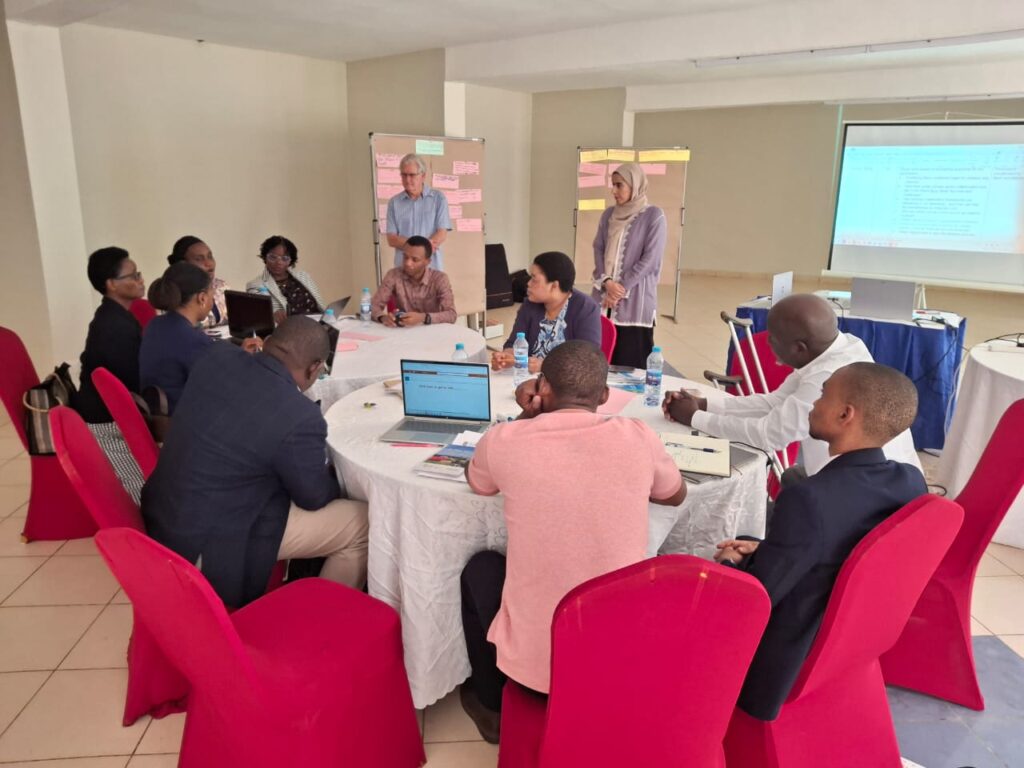
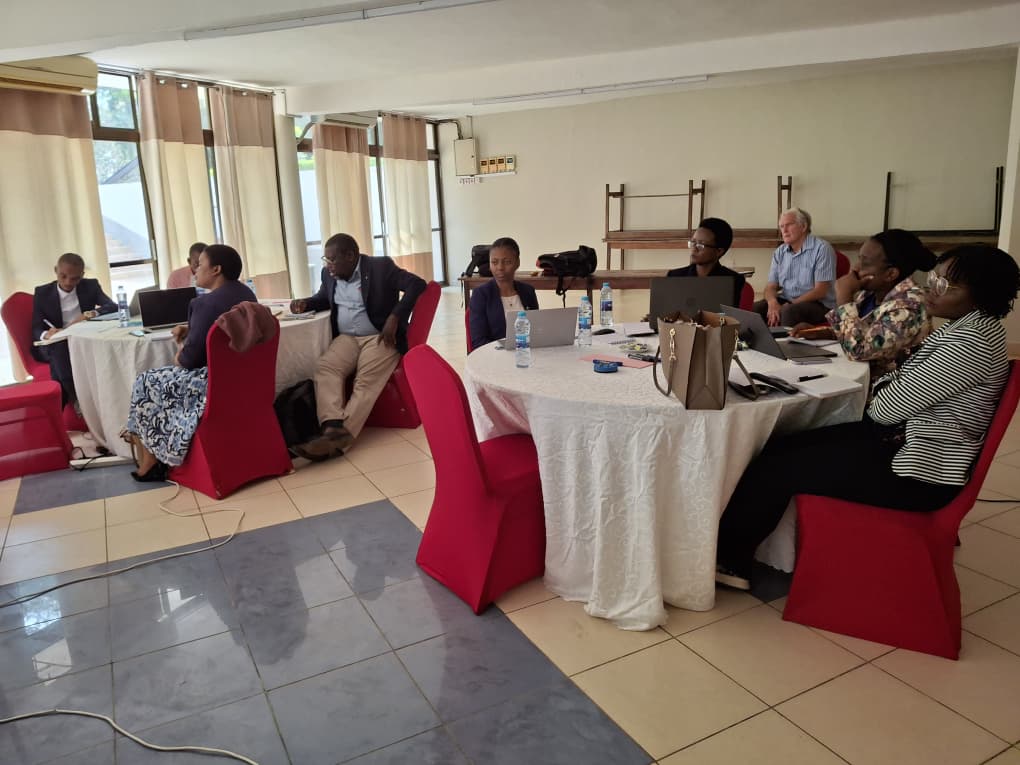
On the 11-12 February 2026, AWS delivered its AWS water stewardship for public sector training module, adapted to the unique challenges and opportunities for water stewardship in Tanzania. More than 30 participants, representing various public sector institutions such as the Ministry of Water Resources, the Vice President’s Office, the Fisheries Department, the Ministry of Industry and Trade, water basin boards and many more from Dar es Salaam, Tanga, Mwanza and Dodoma participated. 

The training course was held in Dar es Salaam and spanned over two days. It was developed to help public sector participants use water stewardship to build trust-based relationships with private sector institutions and other non-state organisations. These relationships can create opportunities for more collective actions for responsible water management in the catchment, which can lead to stronger compliance to water-related regulations and, potentially, boost resilience of the catchment and jurisdiction. 

The training was the first step towards building a public sector that has greater awareness of water stewardship.  Over the next couple of months, AWS will continue to engage with the participants to better understand how water stewardship can best support their national targets.  

If you are interested to learn more about AWS’s public sector training offer, please contact us.