
Following the enactment of the Basic Plan on Water Cycle in 2014, the Government of Japan has been promoting outreach activities, such as Japan’s ‘Water Day’, to raise awareness of water-related issues, deepen public understanding of water as a vital resource and promote sustainable water management. At the same time, the Japanese government is actively seeking to strengthen collaboration with the private sector at the watershed level to address shared water challenges and advance sustainable water management.
On Japan’s ‘Water Day’ in 2025, AWS, in collaboration with the Japan Water Stewardship Leadership Group, hosted the Japan Water Stewardship Forum. At the event, we welcomed Mr. Yozo Tanaka, the Assistant Counselor for the Secretariat of the Headquarters for Water Cycle Policy, Cabinet Secretariat who delivered a keynote presentation on recent trends in Japan’s water cycle policies and the prospects for corporate collaboration. We recently had the opportunity to interview Mr. Tanaka again, who is currently serving as the Director for Sediment Management in the Water Resources Planning Division, Water Resources Department, Water and Disaster Management Bureau at Japan’s Ministry of Land, Infrastructure, Transportation, and Tourism (MLIT), to learn about the latest policy developments, future priorities and the role that the Japanese government expects companies to play in advancing water stewardship and collaborative river basin management.
Water-related challenges cannot be solved by governments alone. Achieving a sustainable water future requires collaboration among businesses, communities, governments and other stakeholders throughout each watershed. We encourage companies to look beyond their own operational boundaries and contribute to the long-term health and resilience of the watersheds on which we all depend.
- Mr. Yozo Tanaka, Assistant Counselor, the Secretariat of the Headquarters for Water Cycle Policy, Cabinet Secretariat (Currently: Director for Sediment Management, Water Resources Planning Division, Water Resources Department, Water and Disaster Management Bureau, MLIT)
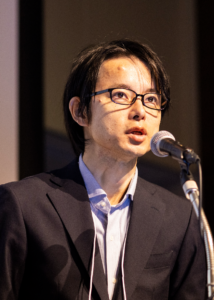
From the perspective of the Ministry of Land, Infrastructure, Transport and Tourism (MLIT), why is it important to involve private companies in river basin management and water stewardship initiatives? What role do you expect private companies to play in integrated watershed management?
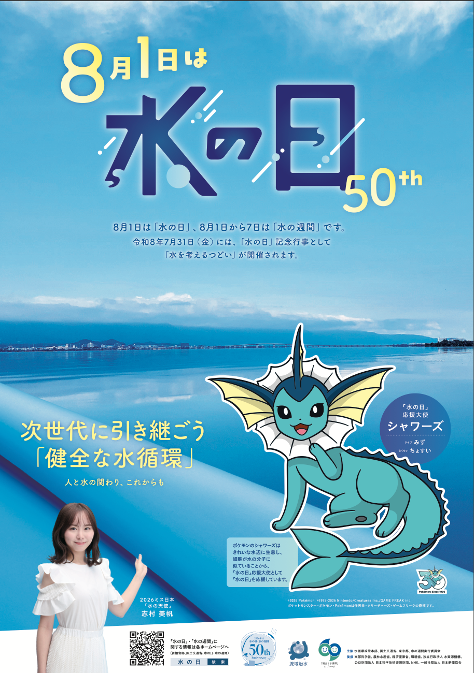
Source: Japan MLIT
Before addressing that question directly, it is important to understand the broader challenges surrounding water management in Japan. The revised Basic Plan on Water Cycle Policy identifies several critical issues, including increased risks of droughts and floods due to climate change, aging water infrastructure, groundwater conservation and utilisation, and impacts on ecosystems. As many of these challenges extend beyond administrative boundaries and affect entire watersheds, effective solutions require collaboration among governments, businesses, communities and other stakeholders.
In response, the Basic Plan promotes integrated river basin management, encouraging cooperation across regions and sectors. This approach is particularly important in Japan, where water resources are shared among diverse users, including agriculture, households and industry. Japan’s water use is highly diverse, with agricultural use accounting for approximately 70%, domestic use 20% and industrial use 10%. Managing these limited water resources effectively requires coordination among all water users.
In this context, water stewardship initiatives provide an important framework for collective action. While companies should first and foremost manage water responsibly within their own operations, they can also play a valuable role in addressing broader challenges through partnerships with local governments, communities and other stakeholders. Examples include forest conservation, groundwater recharge, flood mitigation, rainwater utilisation, wastewater reuse and water-saving measures. In addition, as some regions of Japan have experienced severe droughts resulting in water-use restrictions in recent years, we also have high expectations for initiatives such as rainwater use, water reuse and the adoption of water-efficient technologies.
These efforts help strengthen resilience and support the sustainable management of shared water resources. At the same time, raising public awareness of the importance of water remains essential, and initiatives such as Japan’s annual ‘Water Day’ and ‘Water Week’ provide valuable opportunities to foster greater understanding and engagement.
The Basic Plan on Water Cycle Policy was revised in August 2024. Based on this plan, a number of policies are being promoted nationwide. One of the priority initiatives is the expansion of integrated river basin management to support healthy water cycles.
As part of this effort, regional authorities are encouraged to develop Watershed Water Cycle Plans. As of March 2026, 85 such plans had been established across Japan. The Secretariat of the Headquarters for Water Cycle Policy supports local governments through expert dispatch programs and other advisory services.
The Water Cycle Company Registration and Certification Program, launched in 2024, aims to recognise companies contributing to sustainable water management while promoting visibility and collaboration among participating organisations.
The programme continues to grow steadily. The number of Water Cycle Companies increased from 99 in 2024 to 148 in 2025.
We are now exploring ways to further enhance the programme. Through discussions with an expert committee, we are considering new certification stages that recognise companies demonstrating advanced, long-term activities that extend beyond their own operations and contribute meaningfully to watershed-wide sustainability.
One positive development has been the growth of collaboration among the Water Cycle companies.
To support this, we have organised the Water Cycle Companies Collaboration Fair, which provides opportunities for companies from diverse industries to share knowledge and build new partnerships. The event features keynote presentations by experts as well as case studies from leading certified companies. Many participants have told us that these exchanges inspire them to strengthen and expand their own initiatives. We also see the fair as a valuable platform for discussing river basin-specific challenges and sharing lessons across regions. We hope to continue developing this event in the years ahead.
Source: The Secretariat of the Headquarters for Water Cycle Policy, Cabinet Secretariat
What challenges remain in expanding corporate engagement in water stewardship?
One of the key challenges is the diversity of participating companies. Large corporations often have greater resources and can implement a broader range of activities. At the same time, small and medium-sized enterprises may have a significant positive impact within their local watersheds despite operating on a smaller scale. Therefore, an important challenge is ensuring that certification and evaluation frameworks fairly recognise contributions based not only on company size, but also on the actual value created for local communities and watersheds.
What role do you see AWS playing in strengthening corporate water stewardship and cross-sector collaboration at the watershed level in Japan?
As I mentioned earlier regarding the role of the private sector, international water stewardship frameworks such as AWS are expected to play an important role in facilitating knowledge sharing across regions and countries, promoting dialogue among stakeholders and supporting collaborative action at the watershed level among businesses, governments and local communities.